What Makes South Indian Food Different? Key Differences from North Indian Cuisine
What Makes South Indian Food Different?
What makes South Indian food different is a distinct combination of ingredients, techniques, regional diversity, and culinary philosophy that together create bright flavors, varied textures, and a strong sense of place. From coconut and curry leaves to tangy tamarind and rice-based dishes, South Indian cuisine emphasizes balance, freshness, and rhythm in every meal.
Key Ingredients
- Rice and lentils: Staples that form the base of dosas, idlis, vadas and many stews.
- Coconut: Used as oil, milk, paste and grated flesh, giving richness and sweetness.
- Fresh spices and aromatics: Mustard seeds, curry leaves, chilies, asafoetida, fenugreek and tamarind create layered, sharp flavors.
- Vegetables and seafood: Seasonal vegetables, greens and coastal fish play central roles depending on the region.
Distinct Techniques
- Fermentation: Batter fermentation (idli, dosa) produces tang, lightness and digestibility.
- Tadka/Tempering: Spices popped in hot oil release essential aromatics that define many dishes.
- Grinding and blending: Fresh spice pastes, coconut chutneys and sambar powders are often ground by hand or stone, preserving volatile flavors.
Regional Variety
South India includes Tamil Nadu, Kerala, Karnataka, Andhra Pradesh and Telangana—each with its own specialties. Kerala is known for coconut and seafood, Andhra and Telangana for fiery chilies, Karnataka for milder, earthy flavors, and Tamil cuisine for tangy tamarind stews and hearty rice dishes.
Balance and Health
Meals are typically balanced across tastes—tangy, spicy, bitter, sweet and salty—and often combine fermented foods and lentils, making them nutritious and gut-friendly. Many dishes are plant-forward and use minimal dairy, favoring coconut instead.
Cultural and Sensory Experience
South Indian dining often involves communal meals, banana-leaf service and multiple accompaniments (chutneys, pickles, sambar) that create a layered tasting experience. The textures—from crisp dosas to soft idlis and soupy rasams—add to the feeling of satisfaction and comfort.
Signature Dishes That Showcase the Difference
- Dosa and idli (fermented rice-lentil batters)
- Sambar and rasam (tamarind-based stews and broths)
- Varieties of chutney and podi (fresh, spicy accompaniments)
- Kerala fish curries and Andhra-style pickles
In short, what makes South Indian food different is its emphasis on fermented batters, coconut and tamarind flavors, vibrant spice tempering, and a regional diversity that together create bright, balanced, and memorable meals.
Key Differences Between North and South Indian Cuisine
When exploring what makes South Indian food different from North Indian cuisine, several clear threads emerge: ingredients, techniques, flavors, and regional climate. South Indian cooking emphasizes rice, coconut, tamarind, curry leaves, mustard seeds, and a variety of lentils. North Indian cuisine, by contrast, relies more on wheat (rotis, parathas), dairy (ghee, paneer, cream), and warm spices like garam masala in richer, often cream-based gravies.
Technique plays a major role: South India uses fermentation for dosa and idli batters, tempering (tadka) for final flavor layers, and steaming for lighter textures. North India leans on slow-cooked gravies, tandoor (clay oven) cooking for breads and kebabs, and braising techniques for hearty stews. The differences reflect geography too—coastal access in the south yields more seafood and coconut, while the northern plains favor dairy and wheat.
Flavor profiles differ as well. South Indian dishes often balance tangy tamarind, sour curds, and the bright, aromatic notes of curry leaves and fresh green chilies, producing a light, vibrant palate. North Indian food commonly presents robust, layered warmth from toasted spices, slow-simmered onions and tomatoes, and richer mouthfeel from butter and cream. Both regions share spices and regional overlap, but their techniques and staple crops create distinct eating experiences.
Understanding these contrasts helps answer the question of what makes South Indian food different: it’s not simply one spice or ingredient, but a combination of staples, preservation and cooking methods, regional produce, and cultural dining practices that shape its unique identity within Indian cuisine.
South Indian Cuisine: Masala Dosa
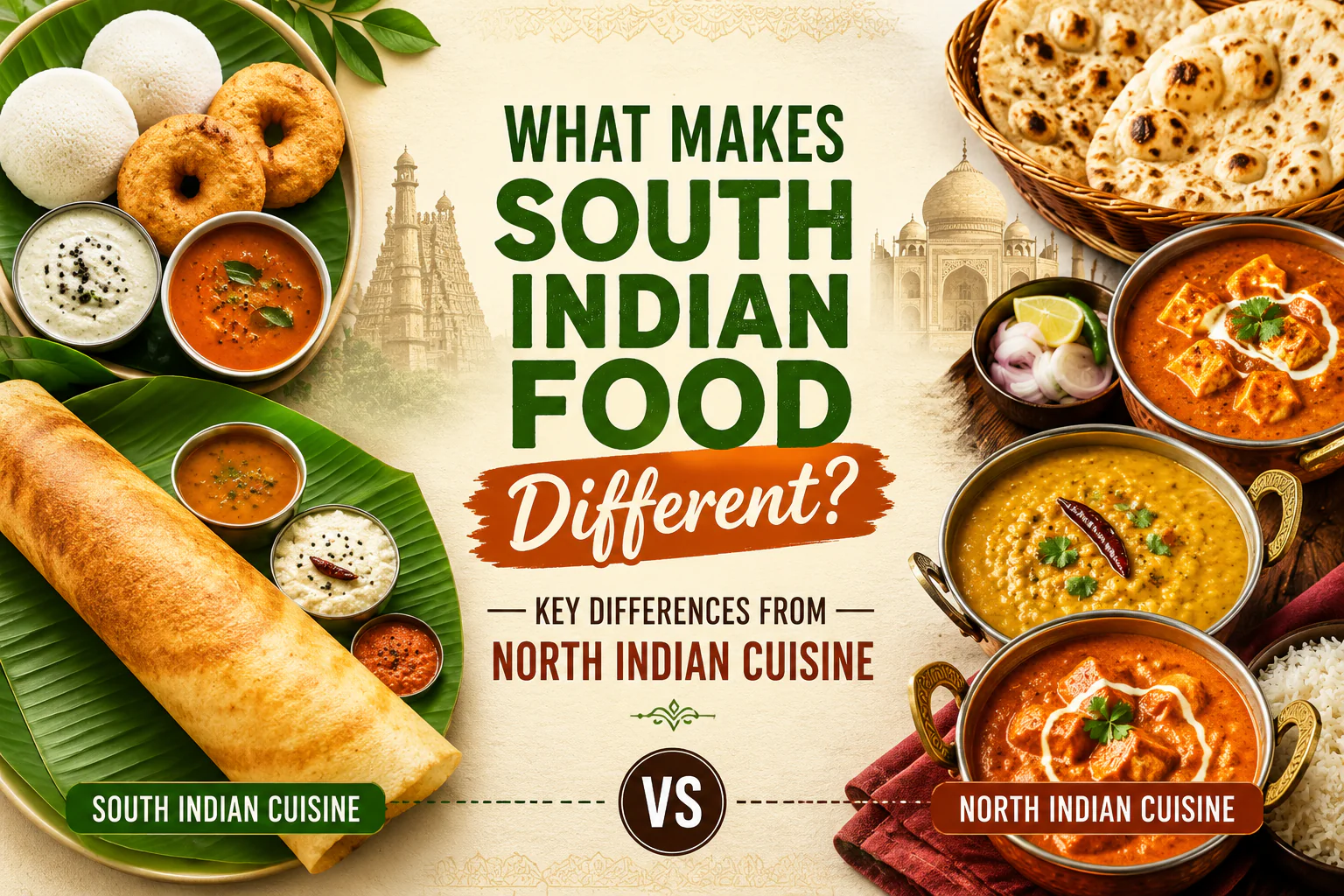
Masala dosa is an iconic dish that illustrates what makes South Indian food different: a fermented, rice-and-urad-dal crepe filled with a lightly spiced potato mixture, served with sambar and chutneys. Fermentation gives the dosa a subtle tang and airy texture, highlighting the regional reliance on fermented batters for idli and appam as well. The dosa’s crispness and the soft, curried potato center showcase contrasts in texture common in southern cooking.
The condiments accompanying masala dosa are also revealing. Sambar—a thin, tamarind-infused lentil stew with vegetables and a tempering of mustard seeds and curry leaves—adds a sour, spicy, and aromatic layer. Coconut chutney provides cooling, creamy relief and showcases the heavy use of coconut in coastal South Indian kitchens. These accompaniments reflect the region’s preference for balanced, complementary flavors rather than a single dominating sauce.
Preparation techniques for masala dosa underline broader culinary principles: soaking and grinding rice and lentils, controlled fermentation, and skillful griddle work to achieve the perfect crispness. The dish’s emphasis on technique over heavy dairy or long-simmered gravies is a hallmark of many South Indian specialties. Taste-wise, masala dosa is bright, tangy, savory, and texturally dynamic—traits that frequently answer why people ask what makes South Indian food different from other regional cuisines.
Finally, masala dosa’s versatility—from street food to restaurant favorite—demonstrates how South Indian food marries simplicity with depth. It’s easy to see the cultural and culinary threads that distinguish southern cooking: rice-based staples, fermented batters, coconut and tamarind flavors, and a focus on complementary side dishes to complete the meal.
North Indian Cuisine: Butter Chicken
Butter chicken represents the opposite side of the regional culinary spectrum and helps clarify contrasts when considering what makes South Indian food different. Originating in the Punjabi region, butter chicken is characterized by a rich, creamy tomato-based sauce, generous use of butter and cream, and spiced, grilled chicken pieces. The result is a luxurious, velvety dish that highlights dairy and slow-cooked gravies—key traits of North Indian cuisine.
The spice profile in butter chicken is warm and rounded: roasted spices, fenugreek (kasuri methi) for a slightly bitter-sweet aroma, and a gently sweetened tomato base. These elements differ from the tangy, coconut- or tamarind-forward notes found in many southern dishes. Butter chicken showcases slow braising and reduction techniques that build deep, concentrated flavors and a heavy mouthfeel, contrasting with the lighter, fermented preparations of the south.
Culinary tools and staples also diverge. Tandoor cooking, common in northern kitchens, imparts smoky char to meats and breads, and wheat-based staples like naan and roti are preferred accompaniments. In contrast, South Indian meals often center on rice and steamed items. Butter chicken’s reliance on cream, butter, and roasted aromatics illustrates how dairy and richness shape northern palates, providing a direct counterpoint to what makes South Indian food different.
Understanding dishes like butter chicken next to masala dosa clarifies regional philosophies: northern cuisine often prioritizes indulgent textures and long-cooked gravies, while southern cuisine favors fermentation, bright-tanged sauces, and lighter preparations—two complementary branches of India’s diverse culinary tree.
South Indian Cuisine & Its Culinary Identity
South Indian cuisine’s identity rests on a few consistent pillars that answer the central query of what makes South Indian food different. Rice and rice-derived items (dosa, idli, puttu), coconut in many forms (grated, milk, oil), and an array of lentils and legumes form the backbone of meals. Curry leaves, mustard seeds, and the technique of tempering create the instantly recognizable aroma and flavor profile of the region.
Fermentation is a cultural and culinary cornerstone: it enhances nutrition, flavor, and digestibility, and appears in many breakfast and snack items. This reliance on fermented batters and pickles creates sour notes and complex umami that differ markedly from unfermented, cream-heavy northern dishes. Coastal produce—fish, prawns, and an abundance of fresh vegetables and fruits—also shapes regional menus, making seafood more prominent than in many northern inland cuisines.
South Indian food places strong emphasis on balance—hot, sour, salty, and sometimes sweet—often achieved through accompaniments like sambar, rasam, and a variety of chutneys. Meals are traditionally served on banana leaves or in course-like sequences that combine rice, dal, vegetables, papad, pickles, and curd, showing a holistic approach to nutrition and flavor. This thoughtful combination of elements is central to what makes South Indian food different: it’s a system of complementary tastes and textures rather than single-dish dominance.
Regional diversity within the south—Kerala, Tamil Nadu, Karnataka, Andhra/Telangana—adds further nuance: Andhra cuisine is known for heat and pickles; Kerala for coconut and coconut oil; Tamil cuisine for subtlety and fermented breakfasts; Karnataka for diversity from coast to plateau. Together these sub-regional traditions form a coherent culinary identity rooted in local produce, time-tested techniques, and a philosophy of balanced, flavorful meals.
Conclusion: Which Cuisine is Better?
Asking which cuisine is better misses the point of regional food traditions. Instead, the question of what makes South Indian food different invites appreciation for distinct approaches to ingredients, technique, and flavor. South Indian food excels at fermentation, rice-based staples, and bright, tangy, coconut-infused flavors, while North Indian cuisine shines with rich, dairy-forward gravies, tandoor techniques, and warming spice blends.
Personal preference, dietary needs, and context will determine which cuisine a person prefers at any given time. For light, tangy, and fermented dishes that emphasize rice, seafood, and coconut, South Indian food stands out. For creamy, hearty gravies and wheat-based breads, North Indian cuisine will appeal. Both traditions are rich, varied, and deeply tied to their regions’ histories and resources.
Ultimately, comparing them should be an exercise in exploration rather than ranking. Taste both masala dosa and butter chicken, sample sambar and dal, try coastal fish curries and slow-braised kebabs—experiencing the diversity is the best way to understand what makes South Indian food different and to appreciate India’s broad culinary landscape.
FAQ’s
What makes South Indian food unique?
South Indian food is defined by its rice-based dishes, extensive use of coconut, tamarind and curry leaves, fermented batter preparations (idli, dosa, uttapam), bold sour and spicy flavors, and a focus on fresh, seasonal ingredients and simple tempering techniques — these combine to create distinct textures and a balanced, tangy-spicy taste profile that answers what makes South Indian food different.
Is Indian food ok for diabetics?
Many Indian dishes can be diabetic-friendly when chosen and portioned wisely: favor whole grains (brown rice, millets), legumes, fermented items (idli, dosa in moderation), plenty of vegetables, lean proteins, and use minimal oil and sugar; avoid excess fried snacks, sugary desserts and refined grains, and consult a healthcare professional for personalized guidance.
Do South Indians like North Indian dishes? Yes, many South Indians enjoy North Indian dishes; preferences vary by individual, but cross-regional appreciation and fusion are common, so dishes like paneer curries, naan and biryani are popular alongside traditional South Indian meals.
How does the South Indian food differ from the North Indian food?
South Indian cuisine emphasizes rice, coconut, tamarind, and fermented batters with lighter breads (dosa, idli), and tangy-sour flavors; North Indian cuisine relies more on wheat breads (roti, naan), dairy (ghee, cream, paneer), slow-cooked gravies and a different spice balance — the two regions use similar spices but in different combinations and techniques, producing distinct tastes and textures.
What is it about South Indian food that feels special?
The specialness comes from its vibrant contrast of textures (crispy, spongy, brothy), fresh aromas from curry leaves and coconut, the tang of tamarind and fermented foods, and a comforting, wholesome quality that balances flavor, digestibility, and regional freshness.